

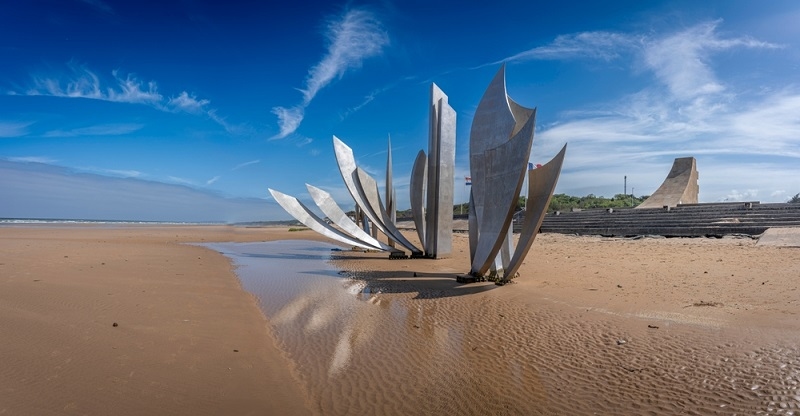
Omaha Beach was one of the five landing zones during the D-Day invasion on June 6, 1944. It quickly became known for fierce resistance and heavy losses. Many people search for what happened at Omaha Beach because the events there shaped the outcome of World War II.
This blog will help you find out everything about the Omaha Beach battle and also learn what happened to the Omaha Beach casualties.
Omaha Beach is remembered as the most difficult landing area during the Normandy invasion. It was assigned to American forces as part of a larger Allied plan. The beach itself looked wide and open, but that open space offered almost no protection. Behind the sand stood steep bluffs and carefully placed defensive positions.
German forces had prepared the area with bunkers, artillery, and machine guns. They had a clear view of the shoreline. When the first American troops arrived, they faced direct fire from above. Movement was slow and disorganized at first. Units became separated. Communication broke down.
To truly understand what happened at Omaha Beach, it helps to look at the sequence of events. The battle did not unfold smoothly. It was messy. Plans changed quickly once reality set in.
Before sunrise, landing crafts moved toward the shore through choppy water. Soldiers were packed tightly inside, carrying heavy gear and weapons. Many were exhausted before even reaching land.
When the ramps dropped, gunfire began almost at once. Troops had to step into deep water and push toward the sand while bullets struck around them. Some landing crafts drifted off course because of strong currents. Others lost equipment in the water.
There was confusion. Officers tried to regroup their men, but noise and chaos made coordination difficult. The first wave suffered heavily. Yet even under that pressure, soldiers continued moving forward. Slowly, they searched for any form of cover.
German troops were positioned along cliffs overlooking the beach. From there, they had a wide and clear field of view. Machine guns were placed inside reinforced bunkers. Artillery units targeted the shoreline.
Barbed wire and metal obstacles blocked easy movement. Mines were hidden across sections of sand. These defenses were not random. They were carefully arranged to slow down and expose attackers.
Because of this setup, American forces struggled to advance inland. Many soldiers remained pinned down behind small rises in the sand. Progress seemed nearly impossible in the early hours. It was not the quick breakthrough some had hoped for.
As larger units struggled, smaller teams began acting independently. Officers gathered nearby soldiers and made quick decisions. They looked for weak spots rather than attacking directly into strong defenses.
Some troops climbed narrow paths up the bluffs. Others attacked bunkers from the sides instead of facing them head-on. These actions were not part of a single clear command. They were decisions made in the moment.
Gradually, these small efforts made a difference. German defenses weakened as more positions were taken. By late afternoon, reinforcements arrived in greater numbers. The beachhead was finally secured, though at a high cost.
There are several Omaha Beach D-Day facts that explain why this location mattered so much. These details show how the landing connected to the wider Allied strategy.
The Normandy invasion was known as Operation Overlord. It involved Allied forces from multiple nations. Omaha Beach was one of five designated landing areas along the French coast.
Its location was critical. It linked American landing zones with British and Canadian sectors. Without securing this stretch of coast, the Allied line would have remained divided. That connection was essential for pushing further into occupied France.
Near the beach stood Pointe du Hoc, a high cliff believed to contain heavy German guns. These guns could have threatened troops landing below. United States Army Rangers were assigned to capture that position.
They climbed steep cliffs under fire using ropes and ladders. Although the main guns had been relocated, they found them hidden nearby and disabled them. This reduced the threat significantly. It remains one of the most discussed Omaha Beach D-Day facts today.
General Omar Bradley oversaw American operations in this sector. Early reports suggested the situation was extremely serious. There was even discussion about withdrawing troops.
However, information from the shore showed that some units were gaining ground. The decision was made to continue sending reinforcements. That choice proved important. By the end of the day, control of the area had improved. Leadership, even under uncertainty, made a difference.
The topic of Omaha Beach casualties is not just about numbers. It reflects what soldiers endured physically and mentally during those hours.
When landing crafts opened, soldiers stepped directly into open fire. The beach offered almost no natural protection. Heavy equipment slowed their movement.
Many radios failed due to water damage. Units became separated from their leaders. Orders could not always be delivered clearly.
The battle placed intense pressure on the troops. Fear, exhaustion, and uncertainty were constant. Seeing fellow soldiers fall created a deep emotional impact.
Top Pick: Top Omaha Museums to Visit for Art and History in 2026
Several factors explain why the landing became so difficult compared to other beaches.
German forces had months to build fortified bunkers and artillery positions. These defenses were reinforced and strategically placed.
The beach had steep bluffs and limited exit routes. Movement inland was restricted to a few narrow paths.
The sea was not calm on the morning of the invasion. Strong currents pushed landing crafts away from planned zones.
Omaha beach acts as a reminder of determination under extreme pressure. The events of June 6, 1944, have shaped the course of World War II and have had a huge impact on global history. By understanding what happened, people gain deeper respect for those who served and the lasting impact of that day.
It was one of the main D-Day landing sites and played a major role in opening a path into Western Europe.
American troops landed under heavy fire, faced strong defenses, and secured the beach after hours of intense fighting.
Strong German defenses, rough sea conditions, and limited early support increased the risks faced by landing troops.
This content was created by AI